
Walking into a casino for the first time feels like stepping onto another planet. Lights flash, chips clatter, and everyone around you seems to know exactly what they’re doing. You don’t want to look lost or make an expensive mistake at a table full of experienced players. The good news is that several casino games are designed with simplicity in mind, and mastering them takes far less time than you’d think.
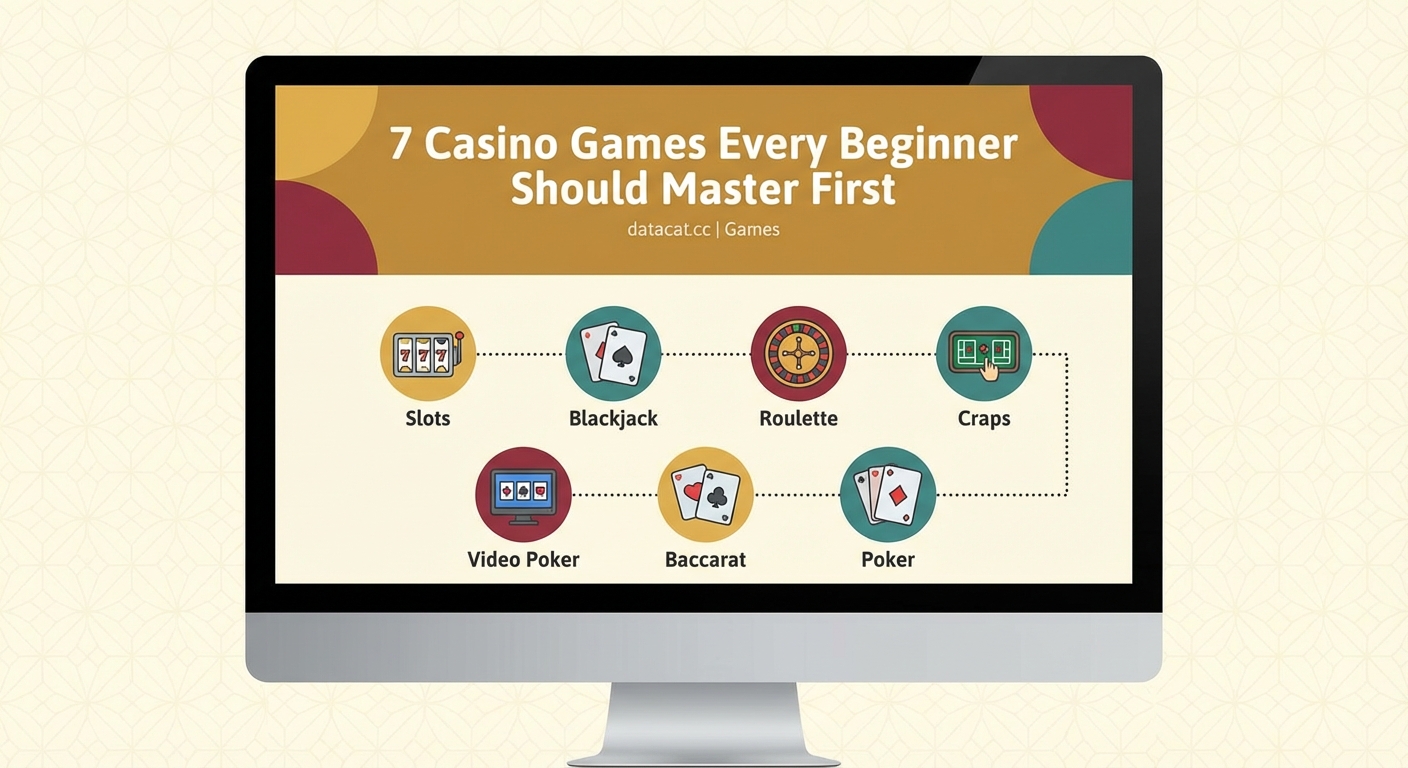
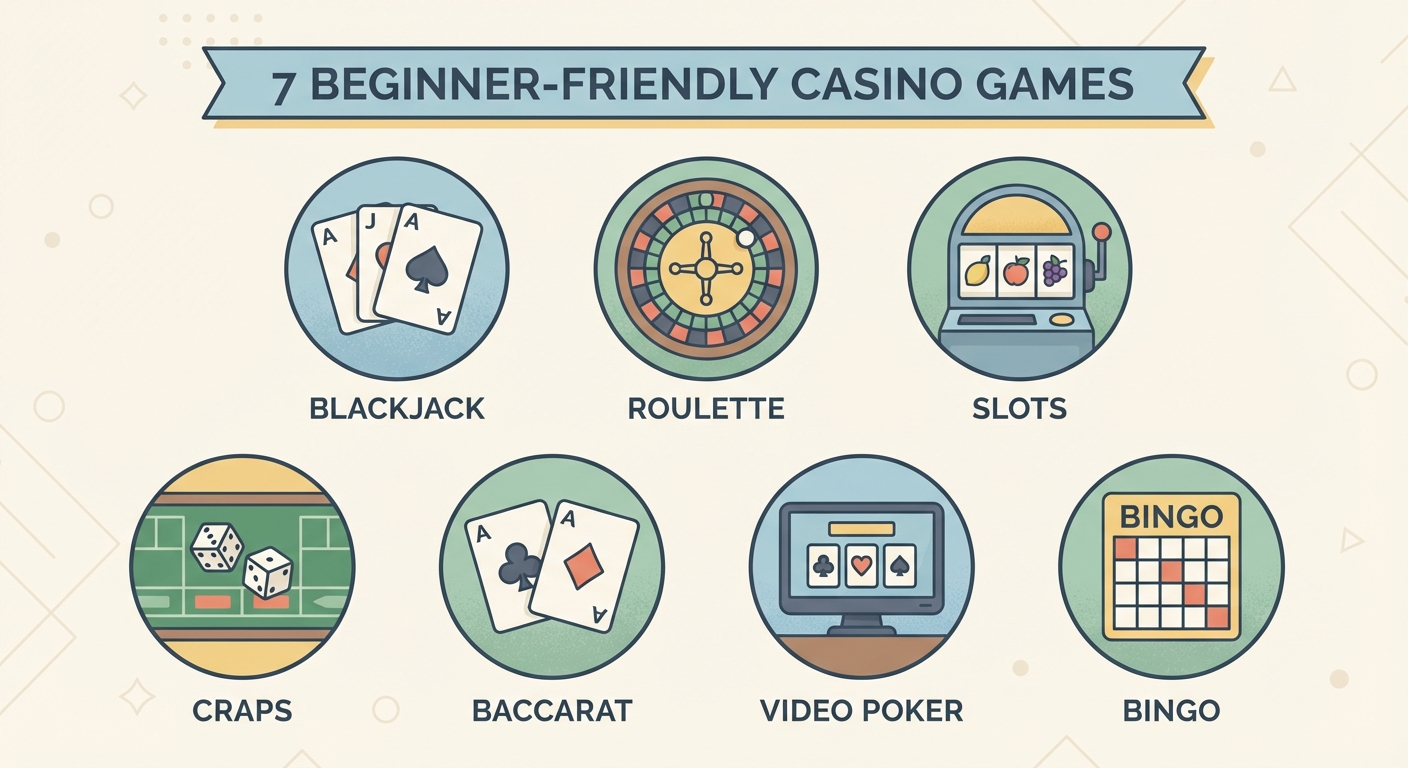
New casino players should focus on games with simple rules and low house edges. Blackjack, roulette, baccarat, craps, and slots each offer different advantages for beginners. Learning basic strategy and bankroll management matters more than chasing big wins. Start with free versions online, then graduate to low-stakes real money tables. Avoid complex side bets and games requiring advanced math skills until you’ve built confidence with foundational games.
Why Some Casino Games Work Better for New Players
Not all casino games are created equal when you’re just starting out. Some require split-second decisions based on probability calculations. Others let you sit back and watch the action unfold.
The best casino games for beginners share three traits. They have straightforward rules you can learn in under 10 minutes. They offer reasonable odds compared to other casino offerings. And they let you play at your own pace without pressure from dealers or other players.
House edge matters more than most newcomers realize. This percentage represents the mathematical advantage the casino holds over time. A game with a 1% house edge will theoretically return $99 for every $100 wagered over thousands of hands. Compare that to games with 5% or higher house edges, and you’ll see why game selection impacts your bankroll survival.
Blackjack Gives You Control Over the Outcome
Blackjack stands out as the single best starting point for casino newcomers. The goal is simple: get closer to 21 than the dealer without going over.
You receive two cards. The dealer shows one card face up. You decide whether to hit (take another card), stand (keep your current total), double down (double your bet and take one card), or split (separate matching cards into two hands).
Basic strategy charts tell you the mathematically correct play for every possible hand combination. These charts reduce the house edge to around 0.5%, making blackjack one of the most player-friendly games on the casino floor.
“Blackjack rewards players who take time to learn basic strategy. You don’t need to count cards or memorize complex systems. Just follow the chart, and you’ll play better than 90% of recreational players at the table.”
Most casinos offer $5 or $10 minimum blackjack tables during off-peak hours. Online casinos let you play for as little as $1 per hand. This low barrier to entry means you can practice real strategy without risking significant money.
When you’re ready to refine your approach, understanding when to split pairs in blackjack can significantly improve your long-term results.
Roulette Requires Zero Skill or Strategy
Roulette appeals to beginners because you can’t make a wrong decision. You place chips on numbers, colors, or sections of the betting layout. The dealer spins the wheel, drops the ball, and pays winners based on where it lands.
The American version features 38 pockets: numbers 1 through 36, plus 0 and 00. European roulette eliminates the 00, cutting the house edge nearly in half. Always choose European roulette when available.
Here are the most common roulette bets:
- Red or black: pays 1:1
- Odd or even: pays 1:1
- Single number: pays 35:1
- Column or dozen: pays 2:1
- Split (two numbers): pays 17:1
No betting system can overcome the house edge in roulette. Strategies like the Martingale or Fibonacci might feel scientific, but they don’t change the underlying math. Treat roulette as pure entertainment rather than a profit opportunity.
The game moves at a comfortable pace. You have plenty of time between spins to place bets. Nobody judges your choices. This relaxed atmosphere makes roulette perfect for casino newcomers who want to ease into the environment.
Baccarat Offers the Simplest Gameplay on the Floor
Baccarat intimidates beginners because of its association with high rollers and velvet ropes. The reality is far different. This game requires less decision-making than any other table game.
You bet on either the Player hand, the Banker hand, or a Tie. The dealer handles everything else. Two hands receive two cards each. The hand closest to 9 wins. That’s the entire game.
Card values work differently than blackjack:
- Aces count as 1
- 2 through 9 count at face value
- 10s and face cards count as 0
If a hand totals more than 9, only the second digit counts. A 7 and 8 equal 15, which becomes 5. The drawing rules for third cards follow a fixed chart that dealers memorize. You never need to learn these rules yourself.
The Banker bet carries a 1.06% house edge. The Player bet sits at 1.24%. Both options rank among the best odds in the casino. The Tie bet jumps to over 14% house edge and should be avoided completely.
Mini-baccarat tables accommodate lower budgets than the traditional version. You’ll find $10 minimums at most casinos, and online versions start at $1.
Craps Looks Complicated but Plays Simply
Craps tables generate more noise and excitement than any other game. Players cheer together when the shooter rolls winning numbers. This communal atmosphere makes craps uniquely social.
The layout appears overwhelming with dozens of betting options scattered across the felt. Ignore 90% of them. Focus on two bets to start:
- Pass Line: bet before the come-out roll, win on 7 or 11, lose on 2, 3, or 12
- Odds bet: place behind your Pass Line bet after a point is established, pays true odds with zero house edge
The Pass Line carries a 1.41% house edge. Adding maximum odds behind it reduces the combined house edge further. Some casinos allow 10x or even 100x odds, creating situations where the overall house edge drops below 0.2%.
You don’t need to roll the dice to play craps. Standing at the table and betting on the shooter works perfectly fine. Watch a few rolls to understand the rhythm before placing your first bet.
Avoid proposition bets in the center of the table. These flashy options carry house edges between 10% and 16%. Stick with Pass Line and odds until you’ve mastered the basics.
Slot Machines Require Zero Learning Curve
Slots dominate casino floors because they’re instantly accessible. Insert money, press a button, and watch the reels spin. No rules to memorize. No other players to consider. No dealers waiting for your decision.
Modern slots come in thousands of variations. Themes range from ancient Egypt to pop culture franchises. Bonus features include free spins, multipliers, expanding wilds, and interactive mini-games.
House edges on slots vary dramatically. Penny slots might carry 10% to 15% house edges. Dollar slots typically drop to 3% to 5%. Higher denomination machines generally offer better odds.
Return to player (RTP) percentages tell you how much a slot pays back over time. A 96% RTP means the machine returns $96 for every $100 wagered across millions of spins. Look for games with 95% or higher RTP when possible.
Progressive jackpots pool money from multiple machines or casinos. These prizes can reach millions of dollars, though the base game RTP usually drops to fund the jackpot. If you’re interested in how these massive prizes work, why progressive jackpot slots pay out more than you think breaks down the mechanics.
Slots offer entertainment value rather than strategic depth. Set a budget before you start. Walk away when you hit that limit. Never chase losses.
Video Poker Blends Slots and Strategy
Video poker gives you more control than traditional slots while maintaining the solo play format. You receive five cards, choose which to keep, and draw replacements for the discarded cards. Payouts depend on your final poker hand strength.
Jacks or Better is the most beginner-friendly variation. You need at least a pair of jacks to win. The pay table shows exactly how much each hand pays, eliminating any guesswork about potential returns.
Optimal strategy for video poker exists. Playing perfectly reduces the house edge to under 0.5% on full-pay machines. Strategy cards are legal to use while playing, though most players memorize the key decisions after a few sessions.
| Hand | Keep Strategy |
|---|---|
| Royal flush | Keep all five cards |
| Four to a royal | Discard the fifth card |
| Three of a kind | Keep the three, draw two |
| Four to a flush | Keep the four suited cards |
| Low pair | Keep the pair, draw three |
Look for “9/6” Jacks or Better machines. These pay 9 coins for a full house and 6 coins for a flush per coin bet. Anything less increases the house edge.
Video poker rewards patience and discipline. The game moves at whatever pace you choose. Take time to evaluate each hand. Rushing leads to costly mistakes.
How to Choose Your First Casino Game
Your personality and preferences should guide your game selection. Answer these questions honestly:
- Do you want social interaction or solo play?
- Do you prefer fast action or slower pace?
- Does strategy interest you, or do you want pure chance?
- What’s your comfort level with math and probability?
Players who enjoy thinking through decisions should start with blackjack. The strategy element keeps the game engaging, and the low house edge rewards proper play.
Social butterflies fit naturally at craps tables. The shared experience of cheering for the shooter creates instant camaraderie with strangers.
Introverts might prefer slots or video poker. These games eliminate social pressure while still offering the casino experience.
Budget matters too. Calculate how long your bankroll lasts at different bet levels:
| Game | Bet Size | Hands/Hour | Expected Loss/Hour |
|---|---|---|---|
| Blackjack | $10 | 60 | $3 |
| Roulette | $10 | 40 | $5 |
| Baccarat | $10 | 70 | $7 |
| Slots | $0.50 | 600 | $30 |
These numbers assume average house edges and typical playing speeds. Your actual results will vary based on luck and skill level.
Common Beginner Mistakes to Avoid
New players make predictable errors that drain bankrolls faster than necessary. Recognizing these patterns helps you skip the expensive learning curve.
Betting more than you can afford ranks as the top mistake. Set a loss limit before you start playing. When you hit that number, walk away regardless of how you feel. Chasing losses leads to bigger problems.
Ignoring the house edge costs players millions annually. Games like keno or the Big Six wheel offer terrible odds. Which casino games have the best odds provides detailed comparisons to help you make informed choices.
Drinking too much impairs judgment. Casinos offer free drinks for a reason. Alcohol loosens inhibitions and leads to larger bets and poorer decisions. Pace yourself or skip the drinks entirely.
Playing without understanding the rules guarantees mistakes. Spend 10 minutes reading about a game before risking real money. Most casinos offer free lessons during slow periods. Take advantage of these opportunities.
Believing in betting systems wastes time and money. No pattern or progression can overcome a negative expectation game. The Martingale, D’Alembert, and Fibonacci systems all fail given enough time.
Practice Online Before Playing for Real Money
Online casinos let you test games without financial risk. Most sites offer free play modes that use virtual currency. This environment provides the perfect training ground for beginners.
You can learn blackjack basic strategy without worrying about holding up a table. Practice your roulette betting patterns. Try different slot games to find themes you enjoy. Make mistakes without consequences.
When you’re ready to play for real money online, how to maximize your casino welcome bonus without losing money helps you get the most value from promotional offers.
Free play has limitations. You won’t experience the emotional impact of real money wins and losses. The psychological element matters more than most beginners expect. Winning $100 with virtual chips feels nothing like winning $100 of actual money.
Start with tiny real money bets once you understand the mechanics. A $5 session teaches you more about your emotional responses than 100 hours of free play. This self-knowledge proves valuable for long-term bankroll management.
Before signing up anywhere, make sure you know red flags every player should spot before signing up at an online casino to protect yourself from questionable operators.
Bankroll Management Protects Your Budget
How much you bet matters more than which game you choose. Proper bankroll management extends your playing time and reduces the risk of significant losses.
The 1/20 rule provides a solid starting framework. Divide your total gambling budget by 20 to determine your maximum bet size. A $200 bankroll supports $10 bets. This approach ensures at least 20 betting units, giving you enough cushion to weather normal variance.
Never gamble with money earmarked for bills, rent, or other necessities. Your casino budget should come from discretionary entertainment funds. Think of it like buying concert tickets or going to a theme park.
Set win goals alongside loss limits. Decide in advance that you’ll quit if you double your bankroll. This discipline locks in profits instead of giving everything back to the casino.
Track your results over time. Note which games you play, how much you bet, and your ending balance. Patterns emerge after a few sessions. You might discover that you play better at certain times or that specific games suit your style.
Time limits matter as much as money limits. Fatigue leads to poor decisions. Set an alarm for 90 minutes or two hours. Take a break when it goes off. Walk around, grab food, or switch to a different activity.
Building Skills Through Observation
Watching experienced players teaches you more than reading strategy guides. Position yourself near a table and observe for 10 or 15 minutes before sitting down.
Notice how players handle their chips. See how they signal their decisions to dealers. Watch the betting patterns and table dynamics. This passive learning reduces anxiety when you finally take a seat.
Dealers often help beginners. Don’t hesitate to tell them you’re new to the game. Most will explain procedures and even offer strategic advice during slow periods. They want you to have a positive experience and return to the casino.
Other players usually welcome newcomers too. The gambling community tends toward friendliness, especially at lower-stakes tables. Ask questions when you’re confused. Someone will explain.
Avoid rush hours at first. Weekday afternoons and late mornings offer quieter conditions. You’ll find more patient dealers and fewer crowded tables. This relaxed environment helps you learn without pressure.
Understanding Variance and Expected Value
Short-term results rarely match long-term expectations. You might win your first five blackjack hands or lose 10 in a row. This natural fluctuation is called variance.
Games with high variance produce dramatic swings. Slots and video poker can go long stretches without significant wins, then hit a big payout. Low variance games like baccarat produce steadier, smaller results.
Expected value (EV) represents your average result over many repetitions. A negative EV game costs money over time, even if you win during individual sessions. All casino games carry negative EV for players, but the size of that disadvantage varies dramatically.
Understanding these concepts prevents emotional decisions. A losing streak doesn’t mean the game is rigged. A winning streak doesn’t mean you’ve figured out a secret system. Both are normal variance around the expected value.
This mathematical reality explains why the casino always wins long-term while individual players can win short-term. The house edge grinds away at everyone’s bankroll given enough time.
When to Move Beyond Beginner Games
You’ll know you’re ready for more complex games when the basics feel automatic. If you can play blackjack basic strategy without consulting a chart, you’ve graduated from beginner status.
Poker represents the next level for many players. Unlike other casino games, poker pits you against other players rather than the house. Skill matters enormously. The learning curve is steep but rewarding.
Counting cards in blackjack offers another advanced challenge. While not illegal, casinos can ask you to leave if they suspect you’re counting. The technique requires significant practice but can flip the house edge in your favor. Why card counting still works in live dealer blackjack covers the current state of this advantage play method.
Sports betting combines gambling with knowledge of athletics. Success requires research, discipline, and emotional control. The learning curve extends beyond simple game rules into statistics and line shopping.
Don’t rush into advanced games. Master the fundamentals first. The skills you build playing beginner games transfer to more complex situations. Patience and bankroll management matter regardless of which games you eventually play.
Making Withdrawals and Cashing Out
Knowing when and how to cash out is just as important as knowing how to play. Set specific win goals before you start. When you hit that target, collect your chips and leave the table.
Physical casinos make cashing out simple. Take your chips to the cashier cage. They’ll count them and hand you cash. Keep your receipt for tax purposes if you win a significant amount.
Online casinos require more planning. Withdrawal methods don’t always match deposit options. Processing times vary from hours to weeks depending on the payment method. How fast are online casino withdrawals in 2024 breaks down your options.
Many players struggle with the psychological aspect of cashing out. Winning creates excitement and confidence. The temptation to parlay wins into bigger scores is powerful. Resist this urge. Taking profits off the table is never wrong.
Consider the “pocket the win” strategy. When you double your initial buy-in, set aside your starting amount. Play only with profits. This approach guarantees you’ll leave at worst breaking even.
Your First Casino Visit Should Feel Fun, Not Stressful
Walking into a casino doesn’t need to intimidate you. Everyone there was a beginner once. The dealers, pit bosses, and other players all started exactly where you are now.
Choose one game to focus on during your first visit. Learn it thoroughly before you arrive. Watch some YouTube videos. Read the rules. Understand the basic strategy. This preparation builds confidence.
Dress comfortably and appropriately for the venue. Most casinos enforce casual dress codes, though some high-end properties require more formal attire. Check the website before you go.
Bring a set amount of cash. Leave your debit and credit cards at home. This physical limit prevents you from spending more than you planned in the heat of the moment.
Go with a friend if possible. Having someone to talk to between hands makes the experience more social and less intense. You can support each other’s discipline when temptation strikes.
The best casino games for beginners prioritize simplicity over complexity and offer reasonable odds compared to other options. Start with blackjack, roulette, or baccarat. Practice online first. Set strict budgets. Learn the rules before betting real money. These fundamentals protect your bankroll while you build skills and confidence. Remember that casinos are designed for entertainment, not income. Treat your gambling budget like any other entertainment expense, and you’ll enjoy the experience without financial stress.