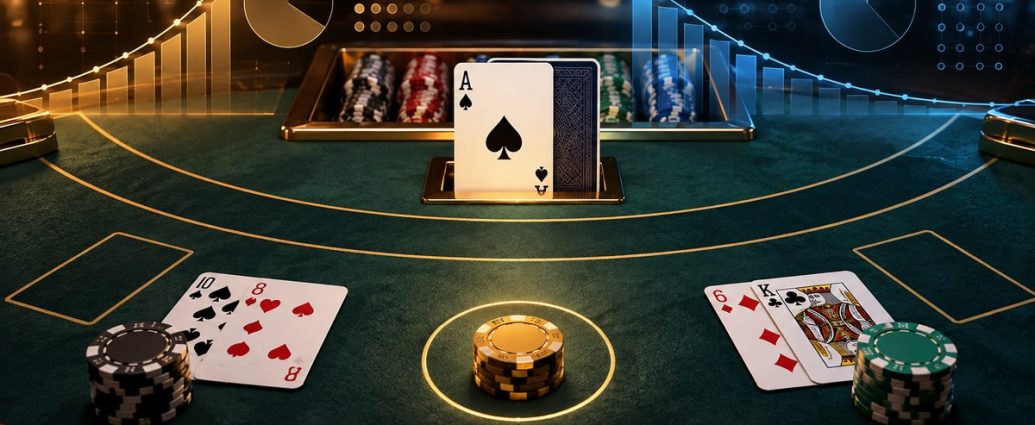
You are sitting at a blackjack table in 2026. The dealer peeks at her hole card and offers you insurance against a potential blackjack. It feels like a safety net, right? A way to protect your original bet if the dealer has a natural 21. But here is the hard truth: the blackjack insurance side bet is one of the worst wagers the casino offers. It looks like a favor, but it is actually a trap designed to drain your bankroll over time. Let us break down exactly why this bet fails the math test, and what you should do instead when the dealer shows an Ace.
Insurance is a side bet that pays 2 to 1 if the dealer has blackjack. The house edge on this bet is roughly 7.5 percent, meaning you lose about seven and a half cents per dollar wagered over time. Card counters can profit from it in rare situations, but for regular players, it is a guaranteed loser. Skip it every time.
What Is the Blackjack Insurance Side Bet?
Insurance is an optional side wager that becomes available only when the dealer shows an Ace as their upcard. Before anyone plays their hand, the dealer asks if anyone at the table wants insurance. You place a separate bet equal to half your original wager. If the dealer has blackjack (an Ace with a ten-value card face down), your insurance bet pays 2 to 1. You lose your original bet, but the insurance payout covers that loss. If the dealer does not have blackjack, you lose the insurance bet and play your hand normally.
This sounds like a fair trade. It is not. The casino designed this blackjack insurance side bet knowing that the dealer will have blackjack far less often than the payout suggests.
How the Insurance Bet Actually Works
When the dealer shows an Ace, they have a face-down card that could be any of the 13 ranks. Only four of those ranks (ten, Jack, Queen, King) give the dealer blackjack. That is 4 out of 13 possible cards, or about 30.8 percent of the time. But the insurance bet pays only 2 to 1, which implies a 33.3 percent chance. The difference between 30.8 percent and 33.3 percent is the house edge.
Here is the step by step process of how insurance plays out at the table:
- The dealer checks their upcard. If it is an Ace, they pause and announce insurance is available.
- You place an insurance bet equal to half your original wager in the designated insurance area.
- The dealer peeks at their hole card using a special device. They do not reveal the card to players.
- If the hole card is a ten-value card, the dealer flips it over and collects all original bets. Your insurance bet pays 2 to 1.
- If the hole card is not a ten-value card, you lose the insurance bet. The dealer continues dealing the round normally.
The House Edge on Insurance Is Brutal
Let us put real numbers on the blackjack insurance side bet. Assume you bet $10 on insurance. Over 13 theoretical hands where the dealer shows an Ace, the dealer will have blackjack 4 times and not have it 9 times.
- When the dealer has blackjack (4 times): You win $20 each time (2 to 1 on $10). Total winnings: $80.
- When the dealer does not have blackjack (9 times): You lose $10 each time. Total losses: $90.
Net loss over 13 hands: $10. That is a loss of about 77 cents per hand, or a house edge of roughly 7.7 percent. Compare that to the main blackjack game, where perfect basic strategy gives a house edge around 0.5 percent. The insurance bet is about 15 times worse for your wallet.
| Bet Type | House Edge | Frequency Offered | Long Term Impact |
|---|---|---|---|
| Main blackjack (basic strategy) | 0.5% | Every hand | Very low |
| Insurance side bet | 7.7% | Only when dealer shows Ace | Very high |
| Even money (insurance variant) | 7.7% | Same as insurance | Very high |
| Typical slot machine | 5% to 15% | Every spin | High |
The Even Money Trap
Many players confuse insurance with the “even money” option. If you have blackjack and the dealer shows an Ace, the dealer may offer to pay you even money (1 to 1) instead of the usual 3 to 2 blackjack payout. This is the same bet as insurance, just packaged differently. You are essentially taking insurance on your own blackjack. The math is identical. The house edge is still 7.7 percent. Do not take it.
Expert advice: Never take insurance or even money. The casino is not offering you a favor. They are offering you a side bet with a massive built in edge. The only exception is if you are counting cards and know that the remaining deck is rich in ten-value cards. For everyone else, the answer is always no.
When Does Insurance Make Sense?
There is exactly one scenario where the blackjack insurance side bet becomes profitable: card counting. If you are tracking the ratio of ten-value cards to non-ten-value cards remaining in the shoe, and that ratio exceeds 1 in 3, the insurance bet flips to a player advantage. Professional card counters have used this for decades.
For the casual or intermediate player who does not count cards, this situation will never happen. The deck composition at a random point in play is almost always against you. Even if you suspect the deck is rich in tens, the sample size is too small to act on without a formal count. Trying to guess when to take insurance is like betting on a coin flip where the coin is weighted against you.
Common Mistakes Players Make with Insurance
Players fall for the insurance trap for several reasons. Here are the most common errors:
- Confusing insurance with protection. You are not protecting your bet. You are making a separate, worse bet.
- Taking even money on a blackjack. A natural blackjack pays 3 to 2. Even money pays 1 to 1. You are giving up real value.
- Listening to table pressure. Other players or even dealers may suggest insurance. They are wrong.
- Thinking it is a small bet. Half your original wager is not trivial. Over a session, these losses add up.
- Believing the dealer “always” has it. The dealer has blackjack less than one third of the time.
A Quick Reference for Insurance Decisions
When the dealer shows an Ace, run through this mental checklist:
- Are you counting cards and know the deck is ten rich? If yes, consider insurance.
- Are you playing for fun without a count? Then never take insurance.
- Do you have a natural blackjack? Do not take even money. Let the 3 to 2 payout ride.
- Are you tempted because you have a big bet out? That is exactly when the casino wants you to take insurance. Do not do it.
Why the Casino Loves This Bet
Casinos do not offer the blackjack insurance side bet to help you. They offer it because it is a high margin product with low player resistance. The bet feels small, the offer comes at a tense moment, and the payout seems fair. In reality, the casino rakes in about 7.7 cents for every dollar wagered on insurance. Over a year, across thousands of tables, that adds up to serious revenue. Every time you take insurance, you are funding that profit.
If you want to understand more about which bets actually give you a fighting chance, check out our guide on which casino games have the best odds. You will see that the main blackjack game is one of the best deals in the house, while insurance is one of the worst.
How to Handle the Dealer’s Ace
When the dealer shows an Ace and the insurance offer comes, you have three options:
- Decline insurance and play your hand normally. This is the correct play 99 percent of the time.
- Take insurance if you are a card counter with a verified advantage. This is rare and requires serious skill.
- Take even money if you have blackjack and are a card counter. Same condition applies.
For everyone else, the answer is simple. Say no. Keep your half bet in your stack. Use it on the next hand where you have a real chance to win.
The Real Cost of Taking Insurance
Let us look at a typical session. You play 60 hands in an hour. The dealer shows an Ace about 4 or 5 times in that session. If you take insurance each time with a $10 bet, you lose roughly $3 to $4 just on those side bets. That might not sound like much, but it is the difference between a break even session and a losing one. Over a year of regular play, that is hundreds of dollars given away for nothing.
Now compare that to learning basic blackjack strategy, which costs nothing and cuts the house edge to a fraction of a percent. The choice is clear.
Final Thoughts on the Insurance Side Bet
The blackjack insurance side bet is a losing proposition for anyone who does not count cards. The house edge is too high, the payout is too low, and the offer comes at a moment designed to exploit your fear of losing. Next time you see that Ace, smile, decline the insurance, and play your hand with confidence. Your bankroll will thank you.
If you are new to the game and want to build a solid foundation, start with our article on 7 casino games every beginner should master first. Blackjack is on that list for a reason. It offers some of the best odds in the casino when you play it right. Insurance is not part of playing it right.
Keep your money in action on the main game. That is where the real opportunity lives.