
Walking into a casino with $500 and walking out broke three hours later is a familiar story for too many players. The difference between a frustrating night and an enjoyable session often comes down to one thing: how you manage your money. Casino bankroll management isn’t about guaranteeing wins or beating the house. It’s about protecting your funds, extending your playing time, and making sure a bad streak doesn’t wipe you out before you’ve had any fun.
Effective casino bankroll management involves setting a dedicated gambling budget separate from living expenses, dividing funds into session limits, choosing games that match your bankroll size, and using unit-based betting systems to control losses. These structured techniques help recreational players extend their casino time, reduce the risk of major losses, and maintain control over their gambling habits without relying on luck or betting systems.
What Casino Bankroll Management Actually Means
Bankroll management is the practice of controlling how much money you bring to the casino, how much you bet per hand or spin, and when you walk away. It’s not a strategy to win more often. It’s a defensive framework that keeps you in the game longer and prevents emotional decisions from draining your wallet.
Your bankroll is the total amount of money you’ve set aside specifically for gambling. This should never include rent money, grocery funds, or emergency savings. It’s entertainment money, period.
Most players skip this step and just bring whatever cash feels right at the moment. That’s a recipe for regret. Without a plan, you’re far more likely to chase losses, increase bet sizes out of frustration, or blow through your budget in minutes.
Building Your Casino Bankroll From Scratch
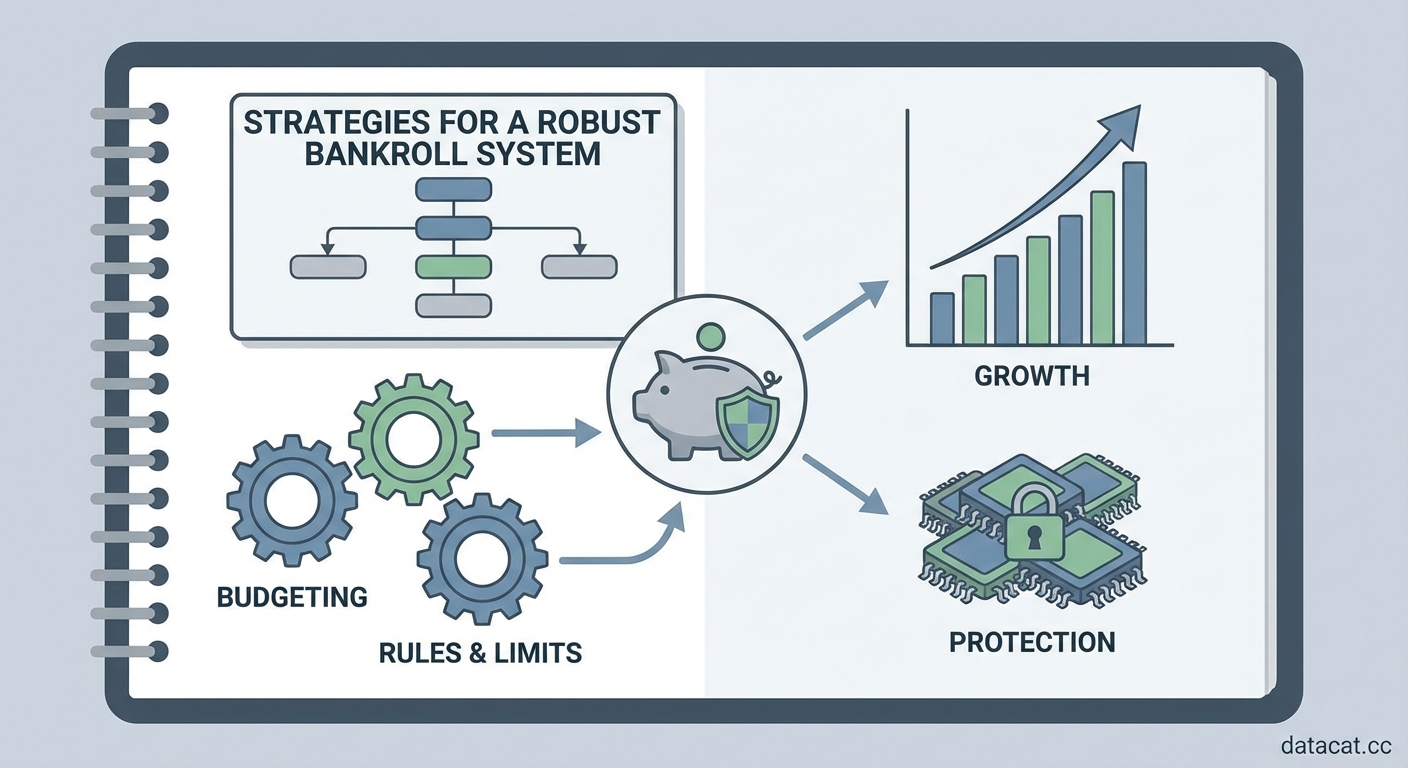
Before you can manage a bankroll, you need to create one. This process should be deliberate and realistic.
- Decide on a monthly or yearly gambling budget based on your disposable income. If you spend $200 a month on entertainment, maybe $100 of that goes toward casino play.
- Open a separate account or envelope specifically for your casino funds. Keeping it physically separate from your everyday money makes it easier to track and harder to dip into impulsively.
- Never borrow money to gamble. If your bankroll runs out, you wait until the next budget period to replenish it.
This approach keeps gambling in the entertainment category where it belongs. You wouldn’t take out a loan to go to a concert, and the same logic applies here.
Session Limits and How to Use Them
Your total bankroll should be divided into smaller session limits. A session is a single visit to the casino, whether that’s two hours on a Saturday night or a full weekend trip.
A common rule is to risk no more than 5% to 10% of your total bankroll in a single session. If you have a $1,000 bankroll, that means bringing $50 to $100 per visit.
This division serves two purposes. First, it prevents you from losing everything in one bad night. Second, it gives you multiple chances to play, which is what most recreational players actually want.
Here’s how session limits break down:
| Total Bankroll | Session Limit (5%) | Session Limit (10%) | Number of Sessions (5%) | Number of Sessions (10%) |
|---|---|---|---|---|
| $500 | $25 | $50 | 20 | 10 |
| $1,000 | $50 | $100 | 20 | 10 |
| $2,000 | $100 | $200 | 20 | 10 |
| $5,000 | $250 | $500 | 20 | 10 |
Notice how even a modest bankroll can support many sessions if you stick to the limits. That’s the power of structured management.
Choosing Games That Match Your Bankroll
Not all casino games are created equal when it comes to bankroll requirements. Slot machines, for example, can drain funds faster than table games because of their pace and volatility.
If you’re working with a smaller bankroll, which casino games have the best odds becomes an important question. Games like blackjack, baccarat, and certain video poker variants offer lower house edges, which means your money lasts longer on average.
High volatility slots might pay out big wins occasionally, but they also go through long dry spells. If you only have $50 for the session and you’re betting $5 per spin, you could be done in ten spins. That’s not fun for anyone.
Lower volatility games and table games with smaller minimum bets give you more hands or spins per dollar, which extends your entertainment time. For beginners, learning about 7 casino games every beginner should master first can help you pick games that fit your budget and skill level.
The Unit Betting System Explained
One of the most effective bankroll management techniques is unit betting. A unit is a fixed percentage of your session bankroll, typically 1% to 2%.
If you bring $100 to the casino and decide on 2% units, each unit is $2. You then bet in multiples of that unit depending on the game and situation.
This system keeps your bets proportional to your bankroll. If you’re winning and your session bankroll grows to $150, your unit size increases to $3. If you’re losing and it drops to $50, your unit size decreases to $1.
The benefit is that you’re never betting too much relative to what you have left. It’s a self-regulating system that protects you from going broke too fast.
Here’s a simple breakdown:
- Conservative approach: 1% units (100 units per session)
- Moderate approach: 2% units (50 units per session)
- Aggressive approach: 5% units (20 units per session)
Most recreational players do best with the moderate approach. It balances longevity with the ability to make meaningful bets.
Common Bankroll Management Mistakes to Avoid
Even players who understand bankroll management in theory often make critical errors in practice. Here are the most common ones:
- Chasing losses by increasing bet sizes. This is the fastest way to blow through your session limit. If you’re down, stick to your unit size or walk away.
- Mixing bankroll funds with everyday money. When you don’t separate your gambling budget, it’s too easy to spend more than you intended.
- Ignoring game variance. 7 slot volatility mistakes that are costing you money highlights how misunderstanding variance can wreck your budget.
- Setting unrealistic win goals. Hoping to double your money every session is a setup for disappointment and risky bets.
- Playing while emotional or intoxicated. Decision-making suffers, and bankroll discipline goes out the window.
Avoiding these mistakes requires discipline, but the payoff is a more enjoyable and sustainable gambling experience.
How House Edge and RTP Impact Your Bankroll
Every casino game has a built-in house edge, which is the mathematical advantage the casino holds over the player. Return to Player (RTP) is the flip side, representing the percentage of wagered money a game pays back over time.
For example, a slot with a 96% RTP has a 4% house edge. Over the long run, you can expect to lose $4 for every $100 wagered. That doesn’t mean you’ll lose exactly $4 every time, but it’s the average.
Understanding these numbers helps you choose games that are kinder to your bankroll. A blackjack game with a 0.5% house edge will drain your funds much slower than a slot with a 10% house edge.
“The house edge is a long-term average, but in the short term, variance can swing results wildly. That’s why bankroll management matters. It keeps you in the game long enough to experience those positive swings without going broke during the negative ones.”
This is why how to choose the right casino game for your playing style is about more than just preference. It’s about aligning your game choice with your budget and goals.
Using Bonuses and Promotions Wisely
Casino bonuses can add value to your bankroll, but they come with strings attached. Wagering requirements, game restrictions, and time limits can all impact how useful a bonus actually is.
A welcome bonus that gives you an extra $200 might sound great, but if it requires you to wager $10,000 before you can withdraw, it might not be worth the effort.
The key is to read the terms carefully and only claim bonuses that fit your playing style. If you’re a casual player who visits once a month, a high-wagering bonus might expire before you can clear it. If you play frequently, how to maximize your casino welcome bonus without losing money becomes a valuable skill.
Free spins and no-deposit offers can be useful for testing games without risking your own money, but they rarely convert into significant withdrawals. Treat them as entertainment, not bankroll builders.
Tracking Your Results Over Time
One habit that separates disciplined players from everyone else is tracking. Keeping a simple log of your sessions helps you see patterns, identify leaks, and adjust your strategy.
Your log should include:
- Date and location of the session
- Starting and ending bankroll
- Games played and average bet size
- Total time played
- Notes on what went well or poorly
After a few months, you’ll have a clear picture of your gambling habits. You might notice that you lose more on weekends when you’re drinking, or that certain games consistently drain your bankroll faster than others.
This data-driven approach takes the emotion out of the equation and helps you make smarter decisions going forward.
When to Walk Away and Protect Your Wins
Knowing when to quit is just as important as knowing how much to bet. Many players hit a nice win and then give it all back because they don’t have a stop-loss or stop-win plan.
A stop-loss is the point at which you walk away to prevent further losses. For most players, this should be your session limit. If you brought $100 and you’re down to $20, it’s time to leave.
A stop-win is the point at which you lock in profits and call it a day. If you’re up 50% or 100% on your session bankroll, consider cashing out and enjoying the win.
Not every session will end in profit, but having these guardrails in place keeps you from turning a winning night into a losing one.
Adjusting Your Strategy for Different Game Types
Different games require different bankroll approaches. Slots, table games, and live dealer games vs RNG games all have unique pacing and volatility profiles.
For slots, you need a larger cushion because of high variance. A good rule is to have at least 100 times your average bet size in your session bankroll. If you’re betting $1 per spin, bring at least $100.
For table games like blackjack or baccarat, 50 to 100 times your minimum bet is usually sufficient. If you’re playing $5 blackjack, a $250 session bankroll gives you plenty of room to ride out normal variance.
For high-stakes games or why progressive jackpot slots pay out more than you think, you’ll need even more cushion because the volatility is extreme.
Tailoring your bankroll to the game you’re playing is one of the smartest moves you can make.
Building Discipline Through Small Wins
Bankroll management isn’t about hitting a jackpot. It’s about creating a sustainable, enjoyable gambling habit that doesn’t wreck your finances.
The discipline you build by sticking to your limits, tracking your results, and walking away when you should will serve you in every session. Over time, you’ll find that you’re having more fun, stressing less about losses, and making smarter decisions at the tables.
Start small. Set a modest bankroll, divide it into sessions, and stick to your plan. As you gain confidence and experience, you can adjust your approach. But the fundamentals never change: protect your funds, bet within your means, and never gamble with money you can’t afford to lose.
That’s the foundation of smart, responsible casino play. Everything else is just details.