
Walking into an online casino lobby for the first time feels like standing in front of a buffet with 300 dishes. Everything looks appealing, but you have no idea what actually tastes good or what will leave you satisfied. Choosing the wrong game wastes money and kills your enthusiasm before you’ve even learned the basics.
Selecting the right casino game depends on three core factors: your budget size, your tolerance for risk, and whether you prefer skill-based strategy or pure chance. Match games to your personality type, test them in free-play mode first, and understand house edge percentages before committing real money. The right game keeps you entertained longer and fits your financial comfort zone.
Start with your budget and session length
Your bankroll determines which games make sense and which ones will drain your account in minutes.
If you’re working with $50 or less, avoid games with high minimum bets. Table games like blackjack or roulette often require $5 to $25 per hand at many casinos. That budget evaporates after ten losing rounds. Slots with penny or nickel denominations stretch your money further and let you play longer sessions.
Players with $200 or more can handle table game minimums comfortably. You get more hands, more decisions, and more time to apply strategy. Bigger budgets also open access to games with better odds but higher entry costs.
Think about how long you want to play. Someone looking for a 30-minute distraction needs different games than someone planning a two-hour session. Slots burn through money faster when you’re hitting the spin button every few seconds. Table games with slower pacing give you more entertainment per dollar.
“The biggest mistake new players make is choosing games based on jackpot size instead of how long their money will last. Entertainment value comes from time at the table, not chasing million-dollar payouts.” — Casino floor manager with 15 years of experience
Understand your risk tolerance
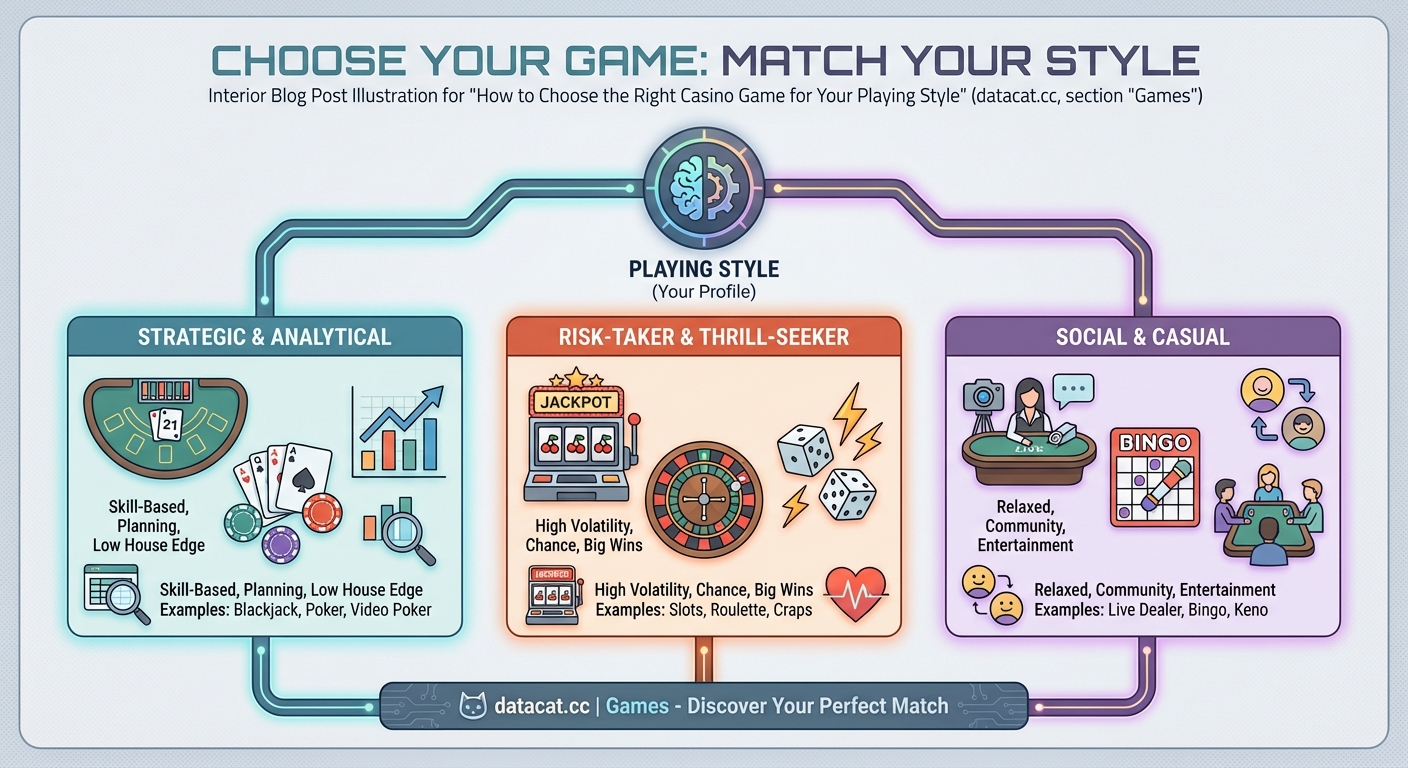
Some players get a thrill from big swings. Others prefer steady, predictable action.
High-volatility games pay out less frequently but offer larger wins when they hit. Progressive jackpot slots fall into this category. You might spin 200 times without a significant win, then suddenly hit a bonus round worth 500x your bet. Why progressive jackpot slots pay out more than you think explains the math behind these variance patterns.
Low-volatility games deliver smaller, more frequent wins. Classic three-reel slots and certain video poker variants keep your balance relatively stable. You won’t hit life-changing jackpots, but you also won’t watch your bankroll disappear in five minutes.
Medium-volatility options balance both extremes. Blackjack, baccarat, and most table games fall here. You experience winning and losing streaks, but the swings stay manageable.
Ask yourself how you’d feel losing $100 in ten minutes. If that thought makes you anxious, stick with low-volatility options. If you’re comfortable with risk and chase bigger payouts, high-volatility games match your style.
Match games to your personality type
Different games attract different player personalities. Finding your match improves enjoyment and results.
Social players thrive at live dealer tables or multiplayer poker rooms. You interact with dealers and other players, share reactions, and feel part of a community. Craps tables in physical casinos offer the most social energy, but live dealer blackjack and roulette recreate that experience online.
Analytical thinkers prefer skill-based games where decisions matter. Blackjack strategy charts, poker hand ranges, and video poker pay tables give you frameworks to study and improve. These games reward practice and learning. When to split pairs in blackjack: a data-backed decision guide shows how strategy impacts outcomes.
Casual players who want simple entertainment do well with slots or roulette. No complex rules to memorize, no strategy charts to study. You pick your bet size, press a button, and see what happens. Perfect for unwinding after work or killing time during a commute.
Competitive players need games with other humans to beat. Poker tournaments, both live and online, scratch this itch. You’re not fighting the house edge but testing your skills against other players.
Learn the house edge differences
Every casino game has a built-in mathematical advantage for the casino. This percentage determines how much you can expect to lose over time.
Games with lower house edges give you better long-term value. Your money lasts longer, and you have better chances of finishing ahead during short sessions.
| Game Type | House Edge | Skill Required | Session Speed |
|---|---|---|---|
| Blackjack (basic strategy) | 0.5% to 1% | High | Medium |
| Baccarat (banker bet) | 1.06% | None | Medium |
| Craps (pass line) | 1.41% | Low | Fast |
| European Roulette | 2.7% | None | Medium |
| Video Poker (full pay) | 0.5% to 2% | High | Fast |
| Slots (average) | 2% to 15% | None | Very Fast |
| American Roulette | 5.26% | None | Medium |
| Keno | 25% to 40% | None | Slow |
Which casino games have the best odds? A statistical breakdown covers these numbers in detail and explains what they mean for your wallet.
Games requiring skill offer lower house edges only when you play correctly. Blackjack has a 0.5% edge with perfect basic strategy but jumps to 2% or higher if you make poor decisions. Video poker follows the same pattern.
Pure chance games like roulette and baccarat maintain consistent house edges regardless of your choices. You can’t improve your odds through skill, but you also can’t make costly mistakes.
Test games in free-play mode first
Most online casinos offer demo versions of their games. Use them.
Free-play mode lets you learn rules, test betting patterns, and understand game mechanics without risking money. You’ll discover whether a game’s pace feels right, whether the interface makes sense, and whether you actually enjoy the experience.
Spend at least 30 minutes in demo mode before switching to real money. This reveals whether your initial excitement holds up or fades after repetitive play. Some games look appealing in promotional videos but feel boring after 20 spins.
Pay attention to how quickly your pretend bankroll moves. If you’re burning through $500 in fake money every ten minutes, that same pattern will destroy your real budget just as fast.
Demo play also exposes games with confusing bonus features or complicated pay tables. Better to feel lost with play money than real cash on the line.
Consider your learning curve preference
Some players enjoy mastering complex systems. Others want instant accessibility.
Games with steep learning curves:
– Poker (hand rankings, position strategy, pot odds)
– Craps (dozens of bet types, table etiquette)
– Blackjack with card counting
– Sports betting with handicapping
These games reward study and practice. You’ll lose money early while learning, but your results improve over time. 7 casino games every beginner should master first suggests starting points for new players willing to invest learning time.
Games with minimal learning curves:
– Slots (pick bet size, press spin)
– Roulette (choose numbers or colors)
– Baccarat (bet banker, player, or tie)
– Keno (select numbers and wait)
You can start playing these immediately with zero preparation. Rules take two minutes to understand. Perfect for players who value convenience over optimization.
Your personality type matters here. If you enjoyed studying for tests in school and like optimizing systems, skill-based games provide satisfying challenges. If you hated homework and prefer relaxation over analysis, stick with simpler options.
Factor in bonus compatibility
Casino welcome bonuses come with restrictions. Some games contribute more toward wagering requirements than others.
Slots usually contribute 100% toward bonus playthrough. Every dollar you wager counts fully toward clearing your bonus. This makes slots the most efficient choice when you’re working through a welcome offer. How to maximize your casino welcome bonus without losing money explains the complete strategy.
Table games often contribute 10% to 25%, or nothing at all. A $100 blackjack bet might only count as $10 toward your wagering requirement. This extends the time and money needed to clear bonuses.
Some casinos exclude certain games entirely from bonus play. Video poker, roulette, and baccarat frequently appear on restricted lists.
Check the terms before claiming any bonus. If you prefer table games, look for casinos offering table game-friendly bonuses rather than forcing yourself to play slots just to clear an offer.
Evaluate your patience level
Game speed varies dramatically across casino categories.
Fast-paced games (50+ decisions per hour):
– Slots
– Video poker
– Online roulette with turbo mode
– Automated table games
These games suit players who enjoy constant action and quick results. You see outcomes immediately and can play hundreds of rounds per session. The downside is faster bankroll depletion and less time to think through decisions.
Medium-paced games (30-50 decisions per hour):
– Live dealer blackjack
– Standard online roulette
– Baccarat
– Most table games
These offer a balance between action and breathing room. You have time to consider bets without long waits between rounds.
Slow-paced games (under 30 decisions per hour):
– Poker tournaments
– Keno
– Some specialty games
Perfect for multitaskers who want casino action while watching TV or doing other activities. The slow pace prevents impulsive decisions but might bore players seeking constant stimulation.
Impatient personalities clash with slow games. Patient, methodical thinkers often dislike the relentless speed of slots. Match the pace to your natural rhythm.
Assess your goals and expectations
Why are you playing casino games in the first place?
Players chasing big wins should understand the tradeoff. Games offering massive jackpots have lower hit frequencies and higher volatility. You’ll lose more often, but potential payouts justify the risk for some personalities.
Players seeking entertainment value prioritize time over profit potential. Lower-volatility games with smaller but frequent wins keep you playing longer on the same budget.
Some players view casino gaming as a skill-building hobby. They track results, study strategy, and measure improvement over time. Skill-based games with lower house edges reward this approach.
Others treat it as pure recreation with no expectation of profit. Any game that provides enjoyment justifies the cost, similar to paying for a movie ticket or concert.
Be honest about your goals. Mismatched expectations create frustration. Someone hoping to pay rent with slot winnings sets themselves up for disappointment. Someone playing blackjack for fun shouldn’t stress over every strategic mistake.
Know when to switch games
Sticking with one game all night isn’t mandatory.
If you’re losing consistently at blackjack, switching to roulette changes the energy and breaks negative momentum. Different games use different parts of your brain and prevent mental fatigue.
Variety also helps you identify which games truly match your preferences. You might think you love poker until you try baccarat and realize you prefer the simpler decision-making.
Set switching triggers before you start playing. Examples:
– Losing 30% of your session bankroll at one game
– Winning double your buy-in amount
– Playing for 45 minutes without enjoyment
– Feeling bored or frustrated
These rules prevent stubborn attachment to losing games and keep your session fresh.
Common mistakes when selecting games
New players repeat the same errors. Avoid these traps.
| Mistake | Why It Hurts | Better Approach |
|---|---|---|
| Choosing games by jackpot size alone | Ignores house edge and volatility | Compare RTP percentages and hit frequency |
| Playing games you don’t understand | Leads to costly errors | Use demo mode first, read rules thoroughly |
| Ignoring bankroll requirements | Causes premature session endings | Match bet sizes to your total budget |
| Chasing losses with higher-variance games | Accelerates bankroll depletion | Stick to your original game selection plan |
| Skipping bonus terms | Wastes promotional value | Read wagering requirements before claiming |
The single biggest mistake is playing games because they look exciting in ads rather than matching them to your actual preferences and financial situation.
Build your personal game rotation
Most experienced players develop a rotation of three to five games they return to regularly.
This rotation typically includes:
1. A low-variance game for casual sessions and bonus clearing
2. A skill-based game for focused play and improvement
3. A high-variance option for occasional jackpot chases
You might play penny slots for 70% of your sessions, blackjack for 25%, and progressive jackpots for 5%. This balance maintains entertainment while managing risk.
Your rotation will evolve as you gain experience. Games that seemed perfect at first might lose appeal after a few months. New releases and game types expand your options constantly.
Track your results across different games. Simple spreadsheets showing wins, losses, and session lengths reveal patterns. You’ll notice which games drain your bankroll fastest and which provide the best entertainment value per dollar.
Your game selection checklist
Before committing real money to any casino game, verify these points:
- Does the minimum bet size fit comfortably within my session budget?
- Have I tested this game in free-play mode for at least 30 minutes?
- Do I understand the basic rules and how to place bets?
- Does the game’s pace match my patience level and available time?
- Am I comfortable with this game’s volatility and potential swings?
- If using a bonus, does this game contribute adequately toward wagering requirements?
- Can I find the game’s RTP or house edge percentage?
- Does this game type align with my skill level and learning preferences?
Answering these questions honestly prevents expensive mismatches between your playing style and game selection.
Finding games that actually fit you
Choosing the right casino game isn’t about finding the “best” option. It’s about matching mechanics, pace, and risk levels to your personality and financial situation.
Your perfect game might bore someone else completely. Their favorite might stress you out. That’s normal and expected.
Start with one or two games that check most boxes on your personal criteria list. Give each a fair trial of several sessions before judging. Pay attention to how you feel during and after playing, not just whether you won or lost.
The right game makes you want to learn more, keeps you entertained throughout your session, and fits your budget without causing anxiety. When you find that match, you’ll know it.